Back to Bidding modules
Responding to minor suit openings

Responding to Minor Suit Openings without 4+ Cards in a Major
You have seen in the previous step how important it is to show major suits in response to your partner’s minor suit openings. But what if you don’t have a suitable major suit holding? Bidding no trumps will often be the answer, but not always.
Back

Responding to Minor Suit Openings without 4+ cards in a Major.

The fruit will talk you through when to respond in no trumps and the slightly peculiar way in which we respond in minor suits if that’s what we need to do.

Question 1/6

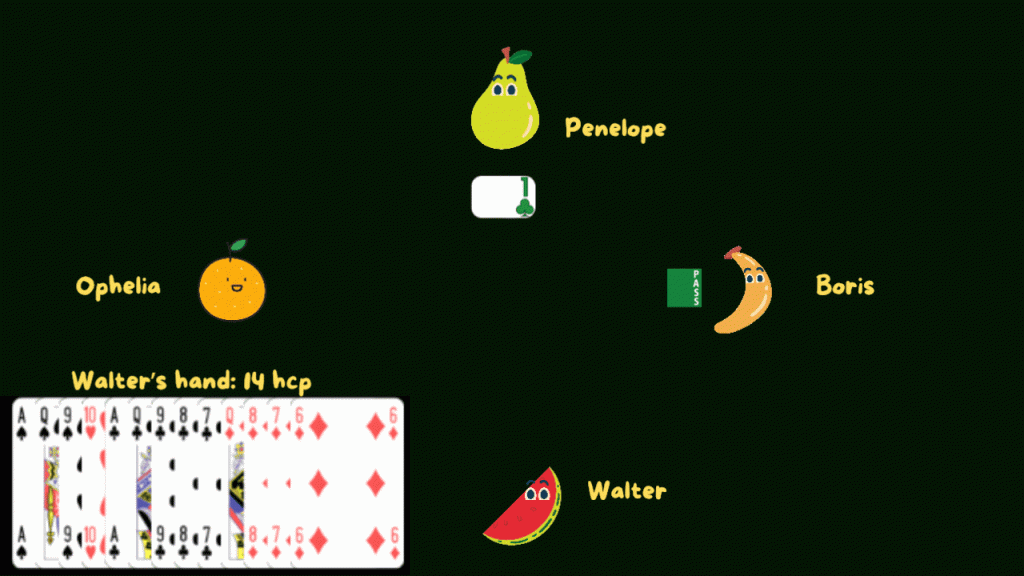
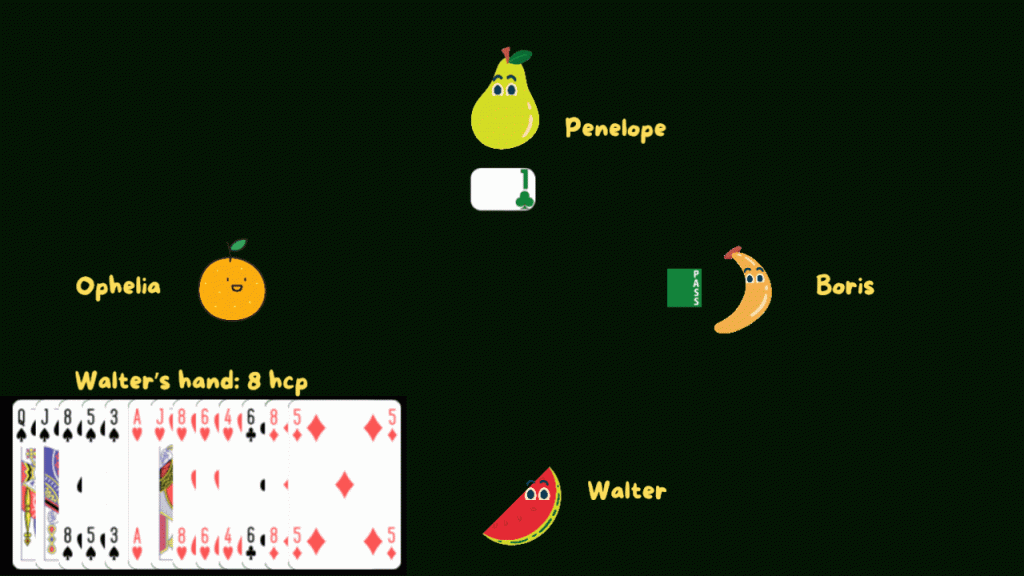
Penelope has opened 1♣. How should Walter respond?

If you don’t have a major suit of four or more cards when partner opens 1♣ or 1, you should usually respond in no trumps unless your hand is very unbalanced. This tells partner that you don’t have a major suit, and also gives them a good idea of how strong your hand is, as the point ranges for NT responses are quite defined. Here, Walter has a weak hand so he should respond in NT at the lowest level.

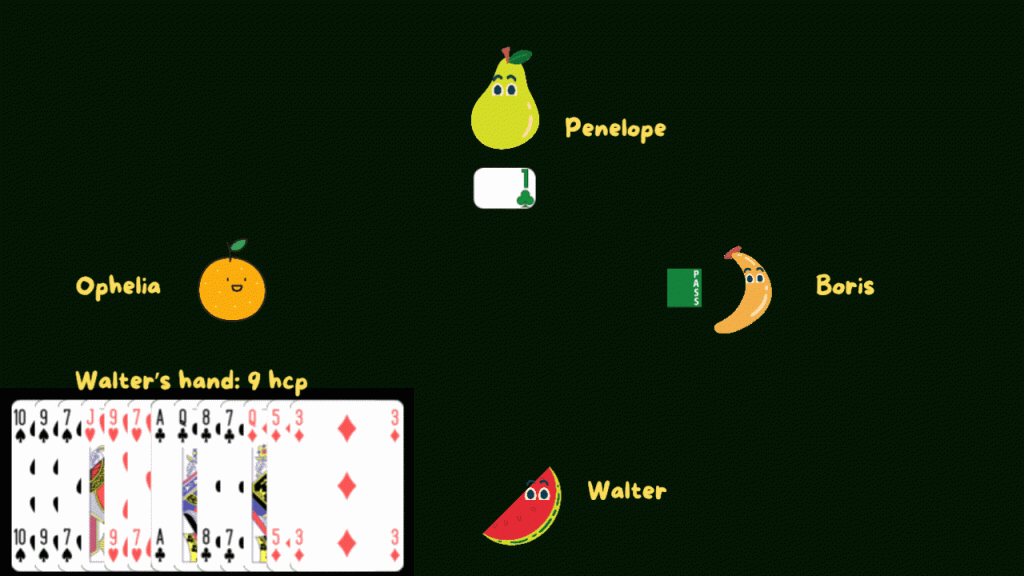
Same situation, but Walter’s hand is a little bit stronger. How can he tell Penelope that with his response?

Walter has a balanced hand without four cards in a major, so he should bid NT. The range for a 1NT response is 6 to 10, so that would be understating the value of his hand. 2NT shows an invitational hand, 11 or 12 points, so that does the job nicely.

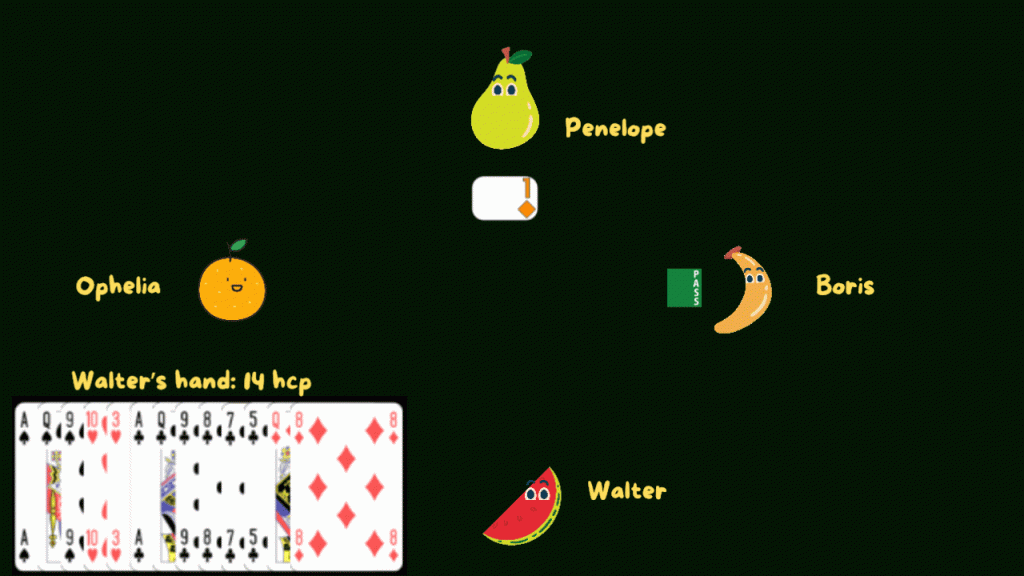
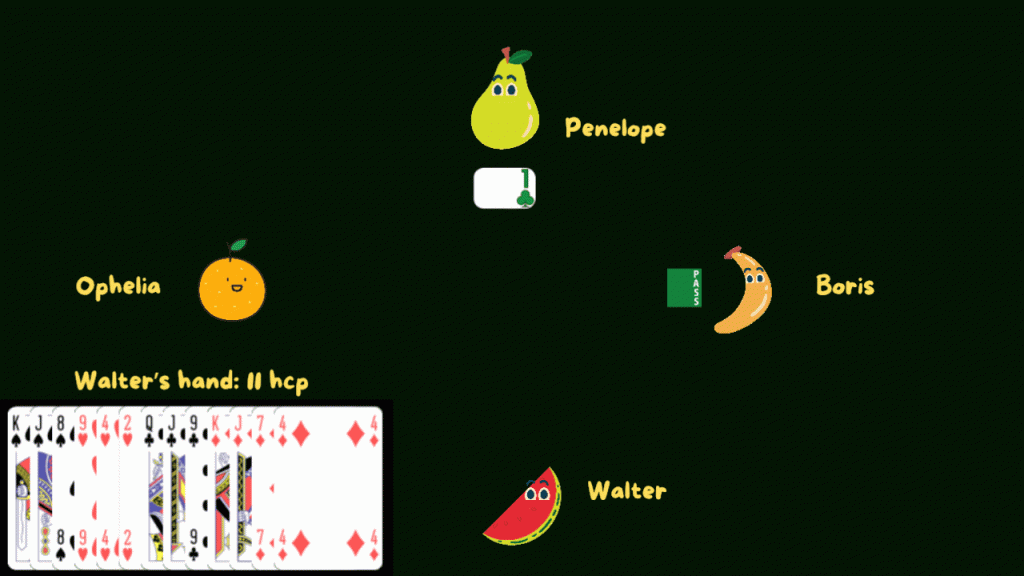
Penelope has opened 1 this time. What is Walter’s best bid?

Another balanced hand without a four card major. This time, though, Walter knows that the partnership has enough points for game, so he should just go ahead and bid 3NT.

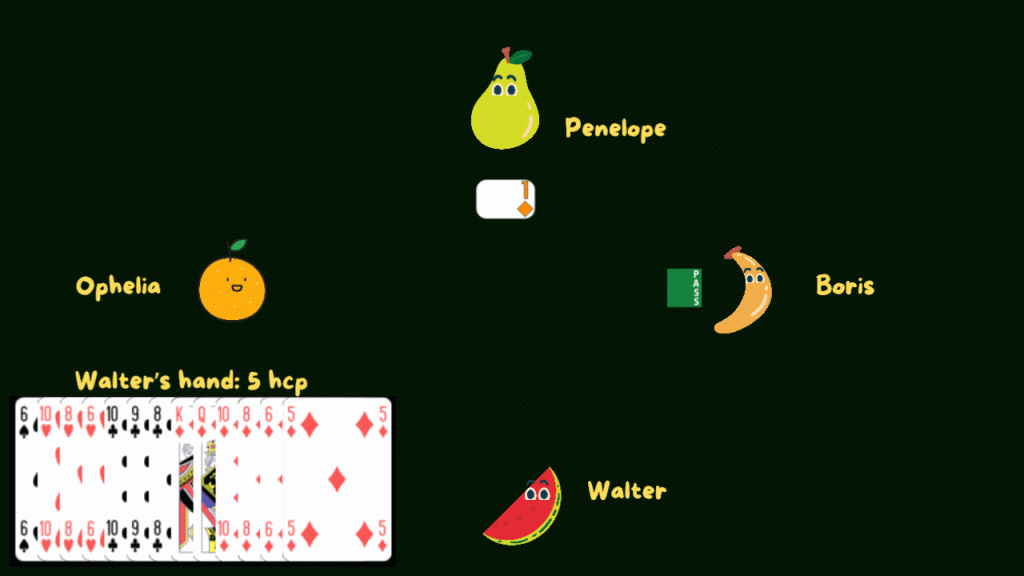
Walter is somewhat surprised when his partner opens 1, as he has so many of them himself. How should he respond?

With such an unbalanced hand and a big fit in diamonds, bidding no trumps does not seem like a good idea. Walter should raise diamonds. If you remember from the video, the principle that we call ‘inverted minors’ means that we do a slightly ‘upside down’ thing with our raises of partner’s minor, where jumping to three is weaker than bidding two of the minor. It’s like a pre-emptive bid that shows a weak, but distributional hand. With only five high card points, Walter’s hand is weak, but with that singleton, and the fit with partner, he should definitely bid, so 3 is the right choice.

Another nice fit with partner’s opening bid. What should Walter bid this time?

Penelope might have as few as two clubs, so they don’t necessarily have a fit in clubs, but with a very unbalanced hand and such a nice five card club suit, Walter should show his club suit. His partner might be interested in playing in clubs, for example if the opponents could have a long suit to cash in 3NT. Without a major suit to bid, raising clubs is the best description of his hand. Because he has a good hand, though, he should bid 2♣. Jumping to 3♣ would show a weak, distributional hand with long clubs.

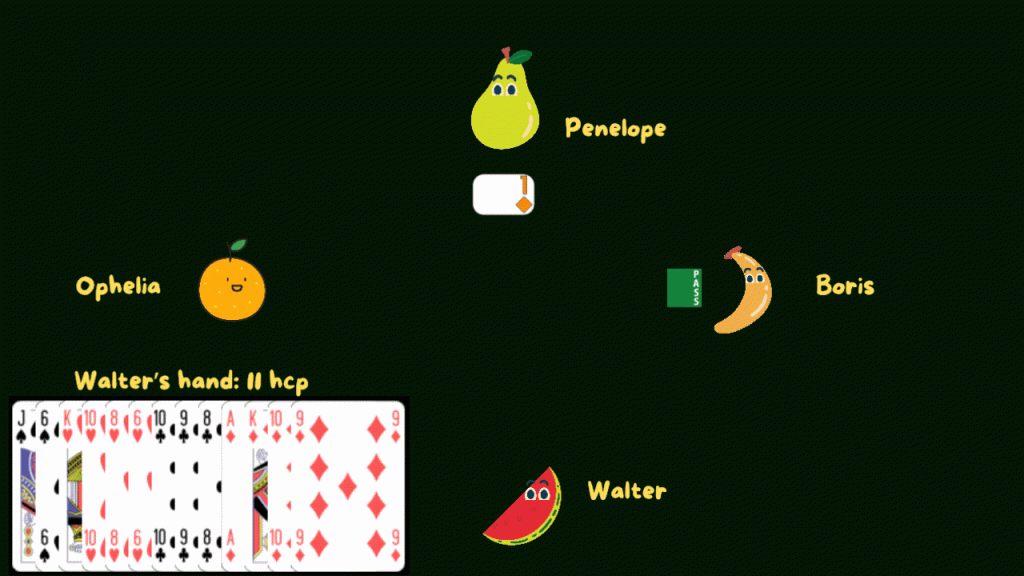
Penelope has opened 1 and Walter has a game forcing, unbalanced hand without a four card major. What should he bid?

Although he can see enough points for game, when Penelope has opened the bidding, Walter should not jump straight to game in either NT or clubs. Because he has to go to the two level to show his club suit, his response is game forcing, so they must always bid to at least a game contract. After Penelope’s next bid, he will have more information on which to judge what the best contract will be.

The links will take you to the Bridge Training website, where, depending on the hand, you will either open the bidding and base your next action on partner’s response, or choose the best response to your partner’s opening bid. You will then be able to play the hand. Have as many goes as you like if you don’t get it right the first time.
Back to Bidding modules
Responding to minor suit openings

Responding to Minor Suit Openings with 4+ Cards in a Major

When your partner opens one club or one diamond your priorities are quite different from when they open with a major suit. In these situations, if you have a major suit of four or more cards, it’s important to show that, rather than focus on the minor suit, even if you have a fit in the minor. Watch the video to find out why, then try the quiz and the practice hands to see how much you remember.
Back

Responding to Minor Suit Openings with 4+ cards in a Major

The fruit, and their hypothetical opponents, the vegetables, will outline this principle for you.

Question 1/4

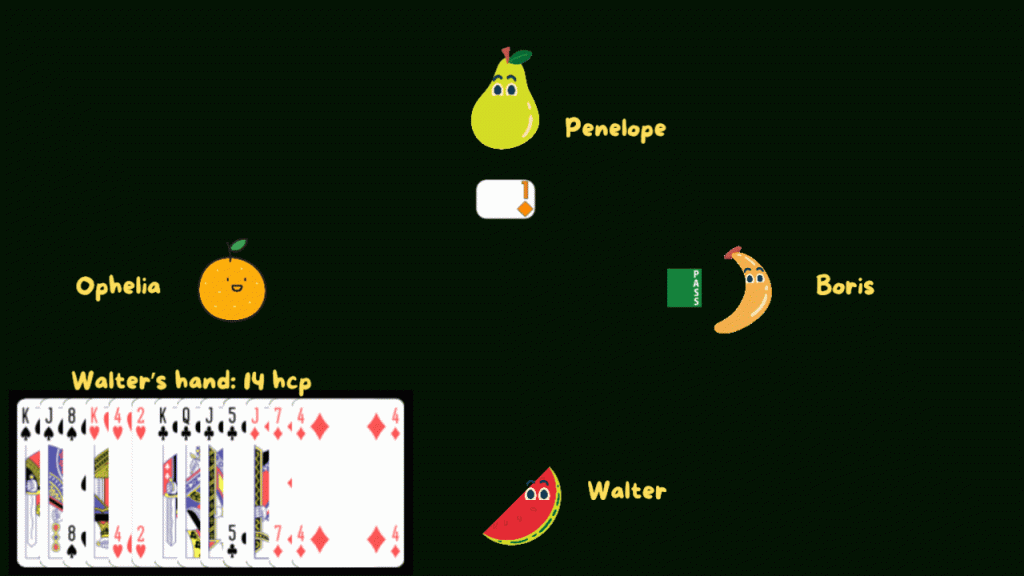
Penelope has opened 1 and Walter has lovely diamond support in his invitational hand. How should he respond?

Because Penelope might well have four hearts in her hand (she can’t open 1 unless she has five), Walter should start by showing his major suit so that the partnership has the best chance of finding the major suit fit if it is there.

Here, Penelope has opened 1♣. Walter loves his club suit! What should he bid?

I hope you didn’t fall into the trap we set by making the club suit so good and the spades quite poor! The principle still holds: When partner opens a minor, you should show a major suit of four or more cards if you have one, even if it doesn’t contain any high cards. Walter should show his spade suit. If Penelope also has four spades, she will be delighted to see this bid.

On this hand, Penelope has opened 1 and Walter has two four card majors. Which one should he bid?

With two four card the majors, you should always bid the lower-ranking suit, hearts, first. Think ‘four on the floor’ to help you remember. So even though his spades are much stronger, Walter should respond 1.

Penelope has opened 1♣ and again, Walter has two major suits in his hand. Which one should he bid this time?

With two five card majors, we do the same as if we had this shape as an opening bidder - we bid the higher-ranking one first. Think ‘high fives’ to help you remember. You don’t need to worry about why we do this, but it makes the subsequent bidding easier.

The links will take you to the Bridge Training website, where you can have a go at choosing the best response to your partner’s opening bid. Because there are aspects of bidding that you have not yet covered, we have given you some notes on each hand that will tell you what to do if you have to make more than one bid. You will then be able to play the hands and see if you can make your contract. Have as many goes as you like if you don’t succeed the first time.


Deprecated: File Theme without sidebar.php is deprecated since version 3.0.0 with no alternative available. Please include a sidebar.php template in your theme. in /home/newtrick/public_html/wp-includes/functions.php on line 6260