Back to Bidding modules
Responding to 1NT openings

Responding to 1NT Openings: 5+ Cards in a Major
Hopefully, you have watched the introduction video about responding to 1NT openings. That will help you to understand why we use transfer bids in these cases. It gives the partnership the maximum opportunity to play in the best contract, based on what is known by both opener and responder. It all takes some getting used to, but you will be surprised at how soon it will seem really familiar. We will start with major suit transfers, which we always use when we have 5 or more cards in either major after a 1NT opening by partner.
Back

Responding to 1NT with 5+ Cards in a Major Suit

Question 1/8

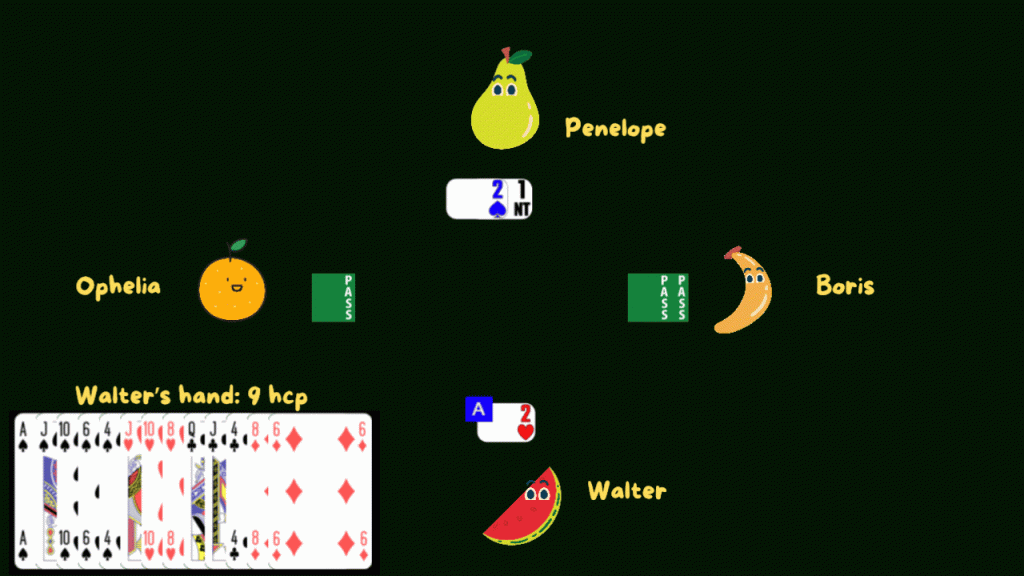
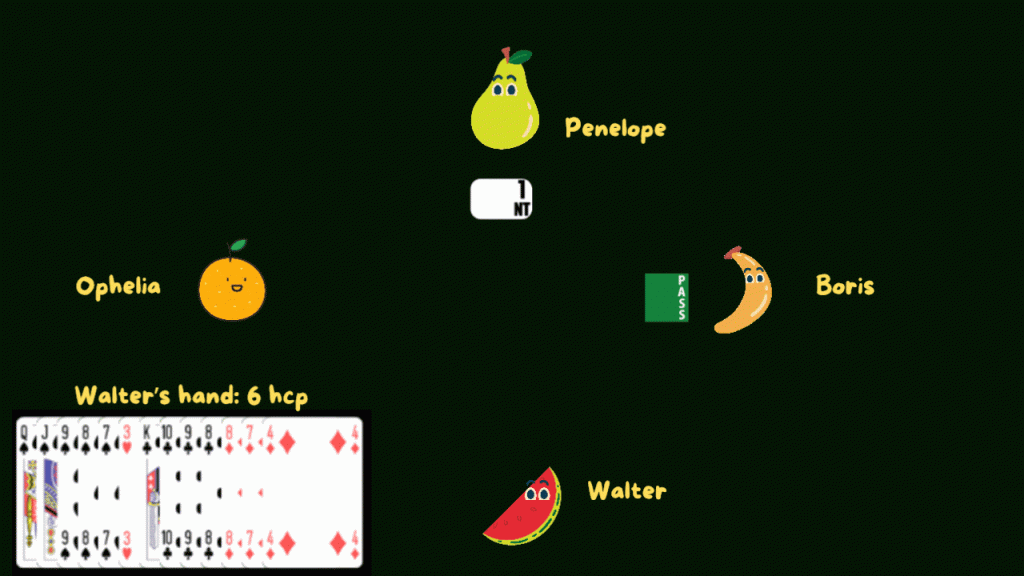
After singing the transfer song to himself, how should Walter respond to his partner’s 1NT opening with this hand?

Walter has 5 cards in a major. As the responder to 1NT opening you should always transfer to your 5-card major - that is make your partner bid your suit - regardless of whether your hand is very weak, invitational or game forcing. “If it’s five or more then who gives a hoot, just make your partner bid your suit” as they say in the major suit response rap. You do that by bidding the suit below your long major and your partner will know to complete the transfer - to bid your suit. Here, Walter's suit is spades, so he bids 2 - the suit below - to make Penelope bid 2♠.

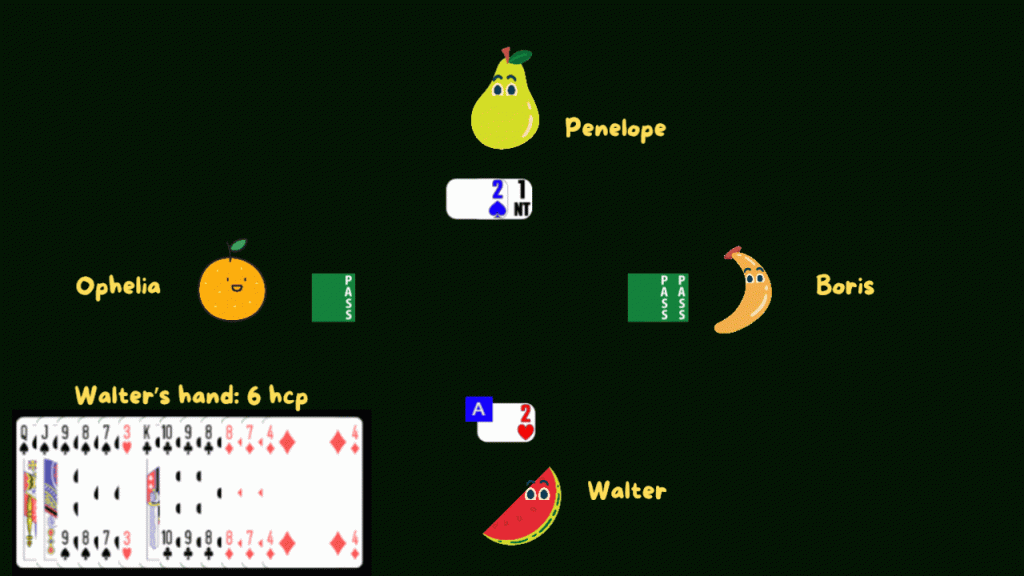
Continuing that same auction, Penelope has completed the transfer by bidding 2♠. What should Walter bid next?

Walter's hand is weak. He knows that the partnership cannot have enough points for game because Penelope's hand is limited to 17 points at most. He also knows that with his hand being so weak, the play will be easier for Penelope in a trump suit, even if she has only two spades. So after the completion of the transfer he should pass, ensuring that the contract will be 2♠ unless the opponents choose to come in at this point.

Let’s look at that same start to the auction again, with Walter having transferred to spades and Penelope having done as she is asked, and bid 2♠. What should Walter bid with this better hand?

This case - where responder has exactly five cards in their long major and invitational strength (9 or a good 8 hcp) is the one where they give opener the maximum number of choices. Walter knows they might have enough for game, if Penelope is not minimum, and that they might belong in either NT or spades, depending on whether partner has three or more spades in her hand. By starting with the transfer, then bidding 2NT, he shows exactly this hand and now Penelope has all the information she needs to play in the best contract. She will pass if minimum with only two spades, or bid 3NT if non-minimum with two spades. If she has fit, she will bid 3♠ and play there if minimum, or bid 4♠ if she is non-mimimum.

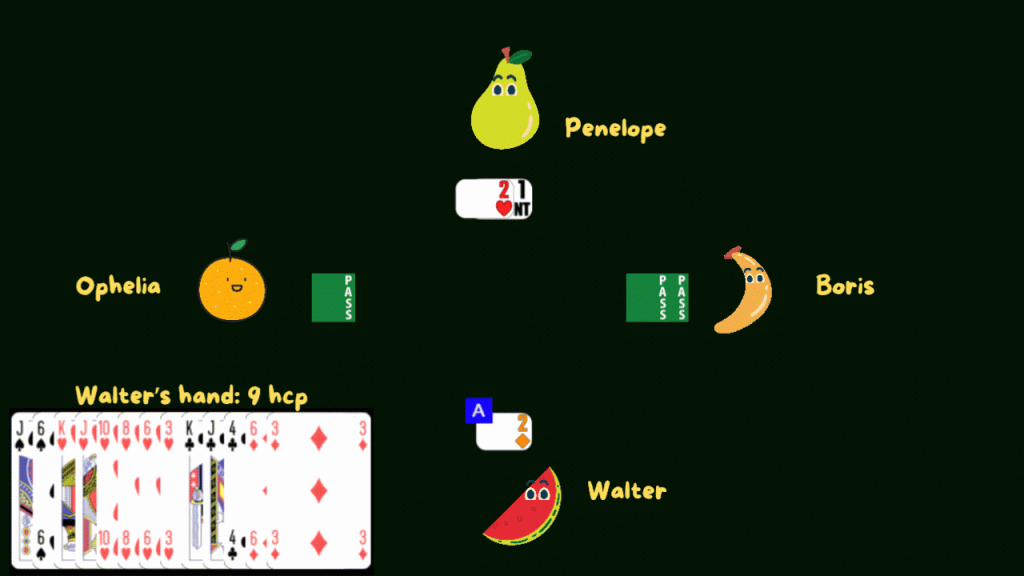
This time, Walter’s major is hearts, and he has six of them. He starts with the transfer, but what should he bid after Penelope’s completion?

With six cards in his suit, Walter knows that the partnership has a fit, because Penelope must have at least two hearts to open 1NT. So he doesn't want to give her the option to play in NT. However, his hand is only invitational, so he doesn't know whether or not they should be in game. By bidding hearts again after the completion of the transfer he shows his extra heart length, and by doing so at the three level he shows his invitational strength. Now Penelope has the choice to pass and play in 3 or to bid 4 if she is non-minimum.

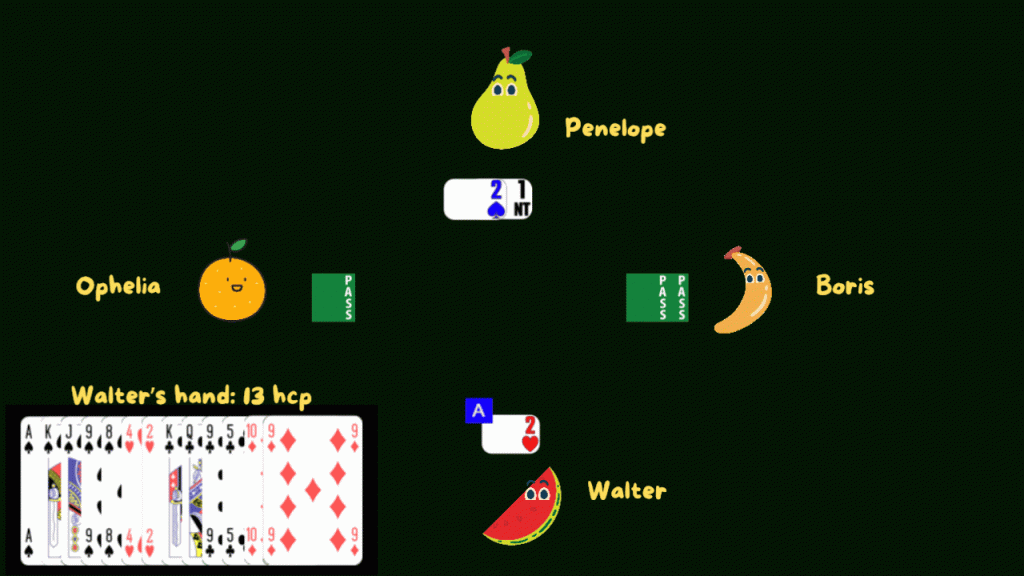
Here, Walter has started by transferring to his five card spade suit, and Penelope has complied. What should Walter bid now?

With 13 points, Walter knows for sure that the partnership has enough to play in game. He doesn't want to give partner any part score options. However, with only five cards in his long major, he doesn't know whether they have an eight card spade fit. If Penelope has only two spades they will want to play in 3NT. So by bidding 3NT he shows his game forcing strength and at the same time he gives Penelope the choice to pass and play in that contract when she doesn't have spade fit or to bid 4♠ if she has three or more spades.

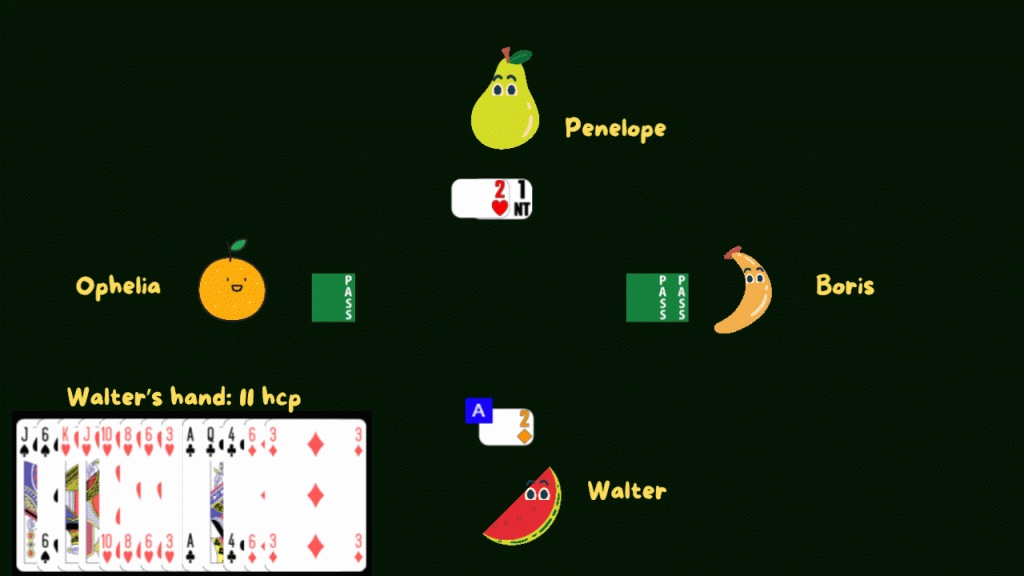
Last one from Walter’s perspective. How should he follow up his transfer to hearts this time?

This time, Walter knows everything he needs to know to choose the best contract. His six card suit means they must have fit in hearts, and he can see enough points for game. He doesn't need to consult partner at all - he can just go ahead and bid 4.

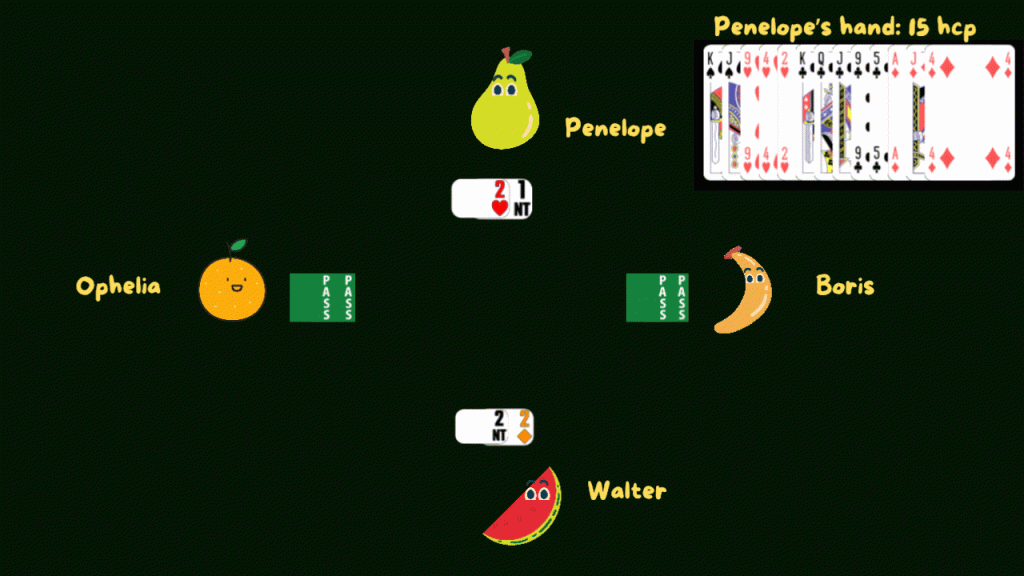
This time, we are looking at things from opener’s side of the table. Walter has transferred to hearts and then followed this up with a bid of 2NT. What should Penelope bid now?

Penelope has heart fit - she has three of them, so she wants to play in hearts. However, Walter's 2NT bid shows that his hand is only invitational. With 10+ points and five hearts he would have bid 3NT to give her the choice of games. She has the minimum 1NT opening - just 15 points, so she should elect to play in partscore and bid 3.

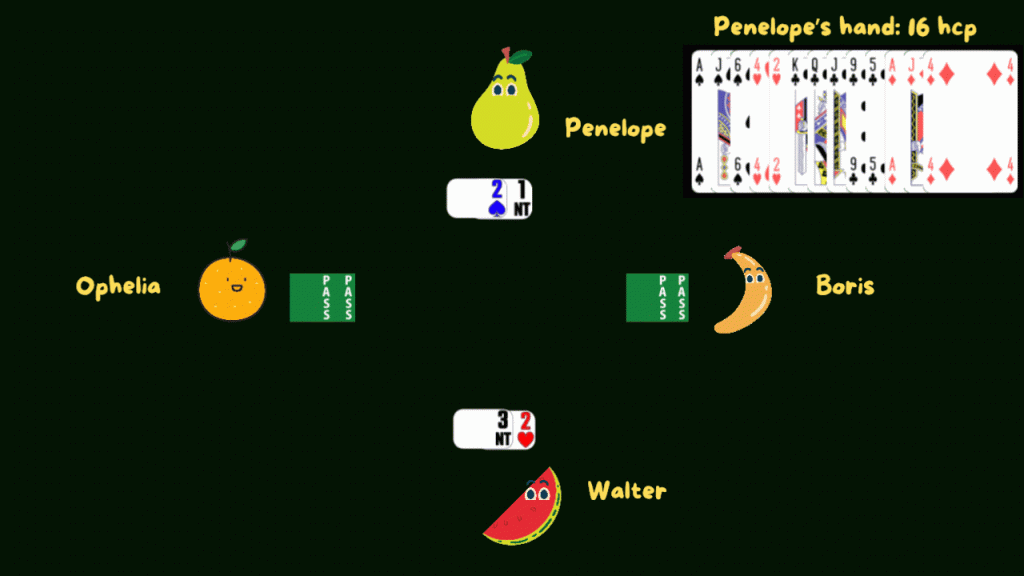
One more from opener’s point of view. What should Penelope bid here?

As Walter's 3NT bid has already put the partnership at the level of game, Penelope has just one choice to make: Would she prefer to play in 3NT or in 4♠. With three nice cards in spades it's clear to prefer to play in 4♠, where they have at least an 8 card fit (especially as she has so little strength in hearts!)

The links below will take you to the Bridge Training website, where you can have a go at bidding and responding to major suit transfers. Because you are practicing responses that will make your partner declarer, you start out in the North seat for the bidding, then you will automatically be swapped to South to play the hand. You will then be able to play the hands and see if you can make your contract. Have as many goes as you like if you don’t succeed the first time.