At lower levels in the auction, we use double to ask partner to bid, when we have points but no natural bid of our own. Playing in a doubled contract though, means that the penalties for not hitting your trick target are greater, and sometimes that is what we want to happen, if we think our opponents have bid too much.
How do you know when your double, or your partner’s, is intended to penalise the opponents, rather than asking you to bid.
Question 1/7
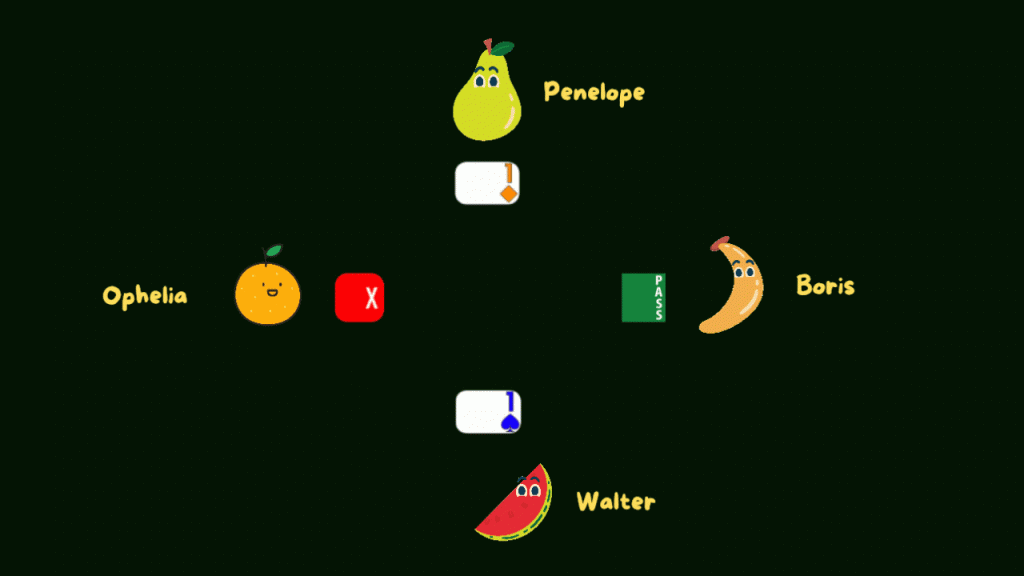
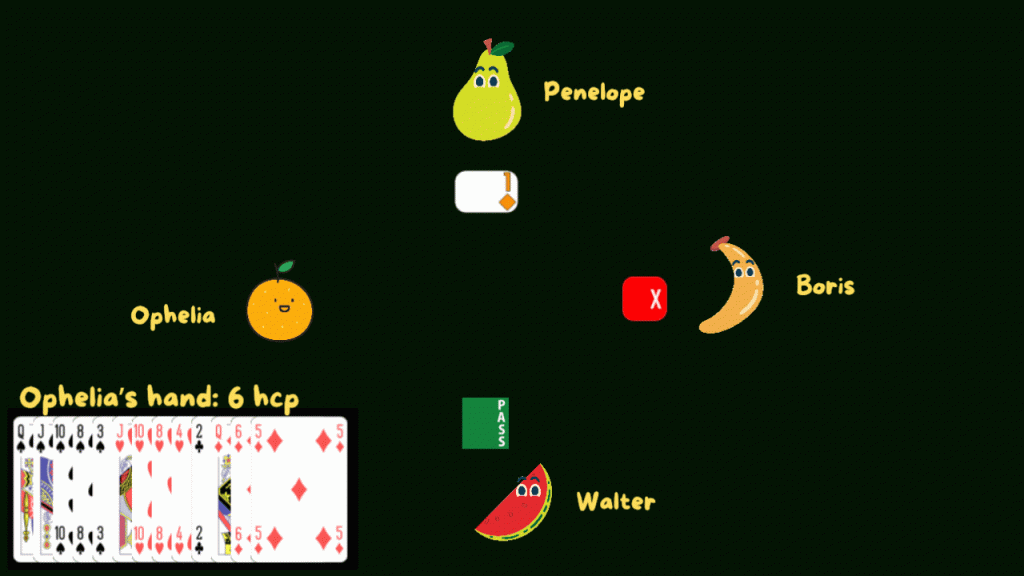
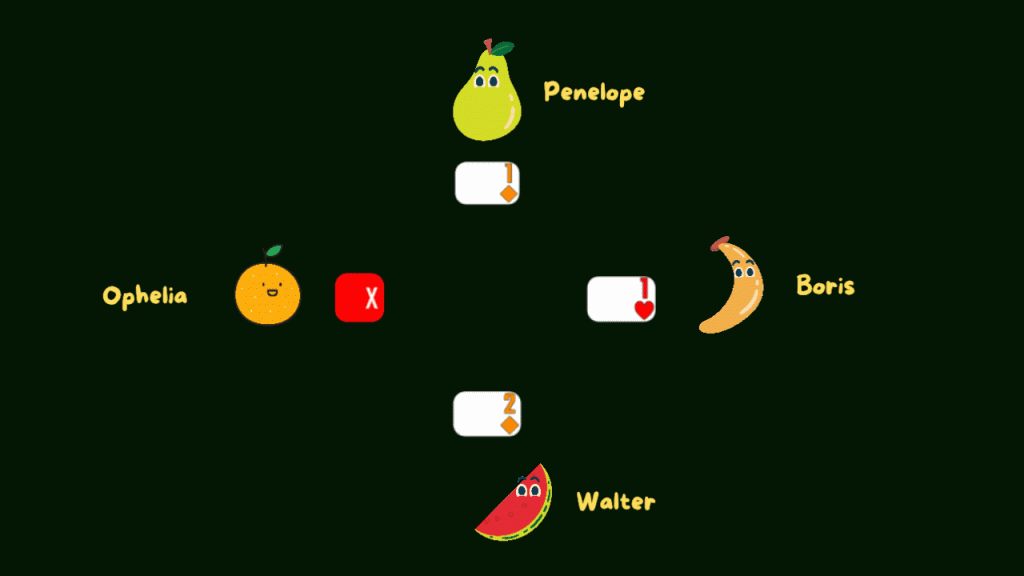
Is Ophelia’s double here for takeout or penalty?
None of the criteria for low level doubles being penalty have been met. No suit has been bid and agreed, no pre-emptive bid has been made, and neither side has opened the bidding in NT, so this double is takeout. Ophelia is showing the two unbid suits - clubs and hearts - at least 4-4.
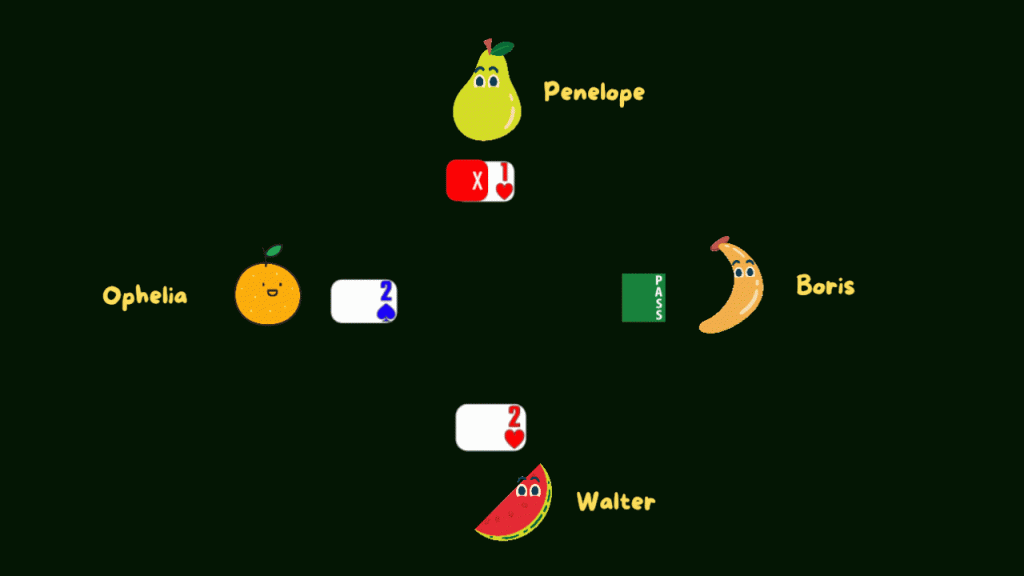
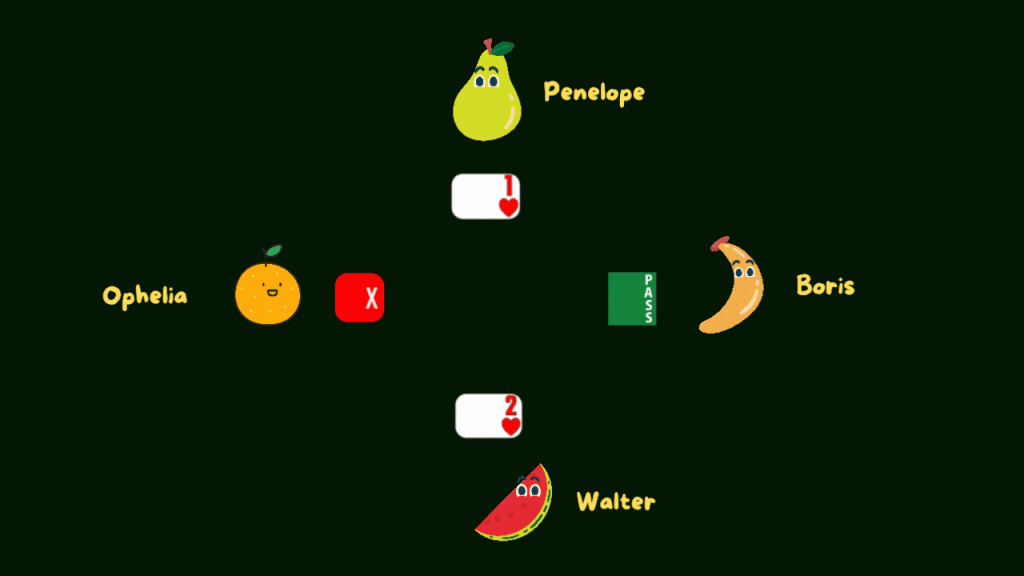
Is Penelope’s double takeout or penalty?
Again, we have a double below the level of game, so we check whether any of the three cases where double would be for penalty apply. You can see that Penelope has opened 1♥ , and Walter has agreed the suit by bidding 2♥ . In this case, it makes no sense for Penelope to be asking Walter for a choice of suits. Her double is penalty. She will have a stronger hand than she has shown so far, and she does not believe that Ophelia can make 2♠. By doubling, she increases the score for her and Walter for every trick that Ophelia goes off in her contract.
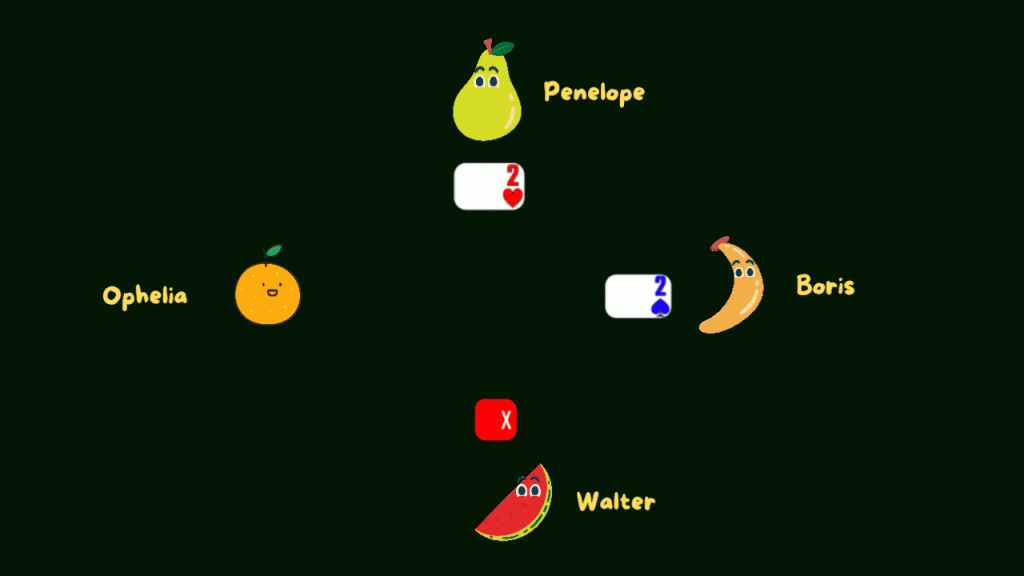
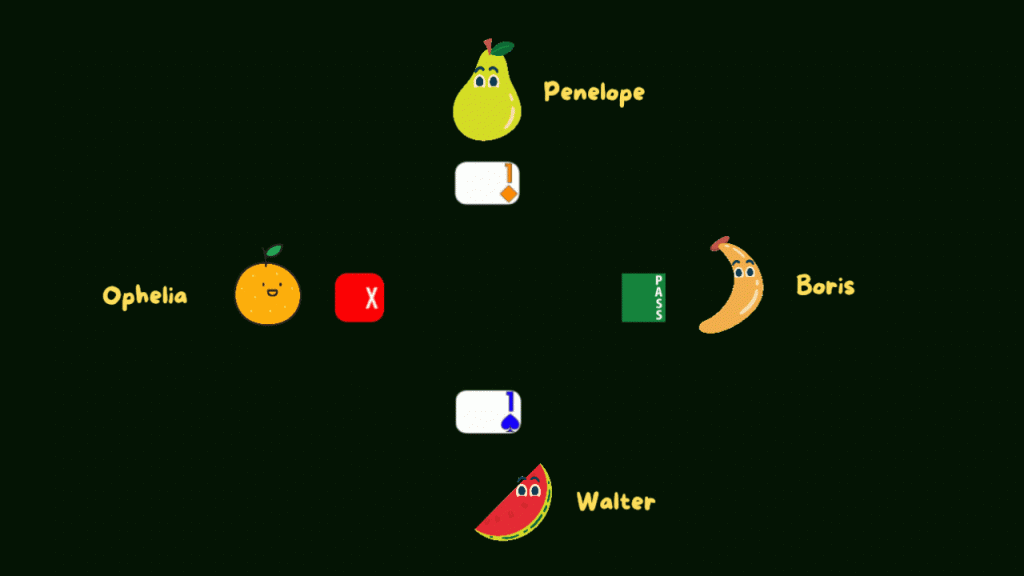
Walter is the one doubling this time. Takeout or penalty?
Again, a low level double, so check your criteria. Penelope opened 2♥ - a pre-emptive opening, showing 6 - 10 points and six hearts. Since his partner's long suit is known, it does not make sense for Walter to be asking her to choose from the unbid suits. He must have a good hand, with good spades, and he does not think that Boris can make this contract. Note that it's unlikely that Walter has heart fit here, as if he had a strong hand with fit he might choose to bid game instead of penalising the opponents. He is also unlikely to have a balanced hand, as with a strong, balanced hand with good spades, he might bid 3NT. The sort of hand that might double here would be four or five spades, one or two hearts, and no stopper in one of the minors.
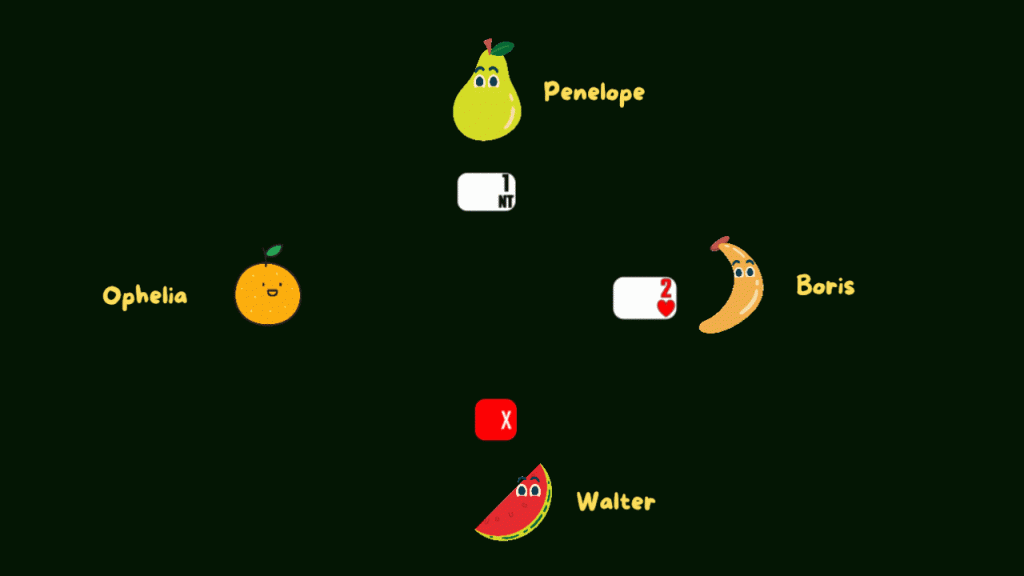
What does Walter’s double show here?
Low level double - remember those criteria? Partner has opened in NT, so doubles are penalty. Walter knows that his side have at least 25 points between them (Penelope has 15-17) so they have enough for game. His double tells Penelope that, and she can now choose to bid on, looking to be in game, or to pass and leave poor Boris to struggle in 2♥ doubled.
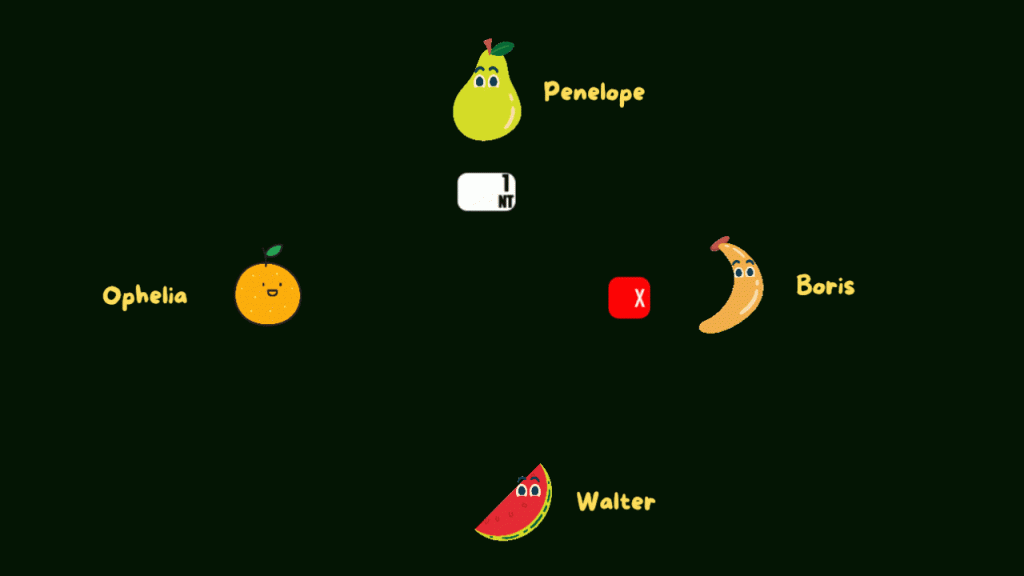
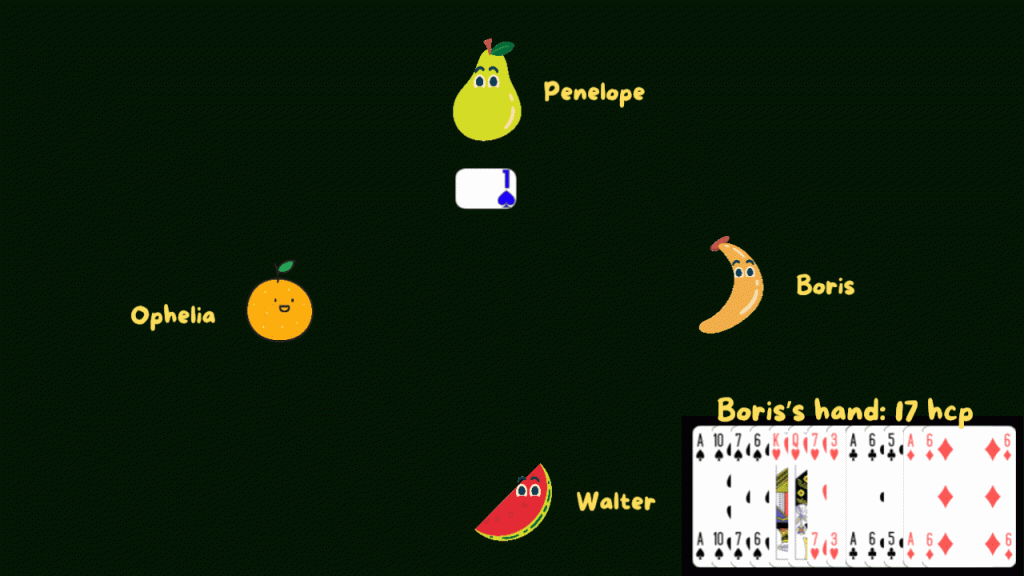
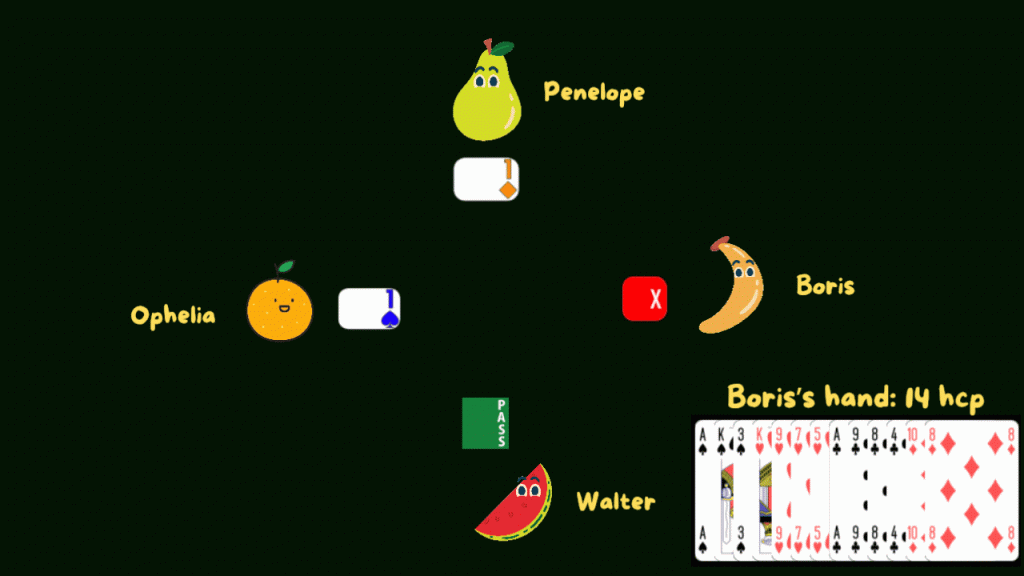
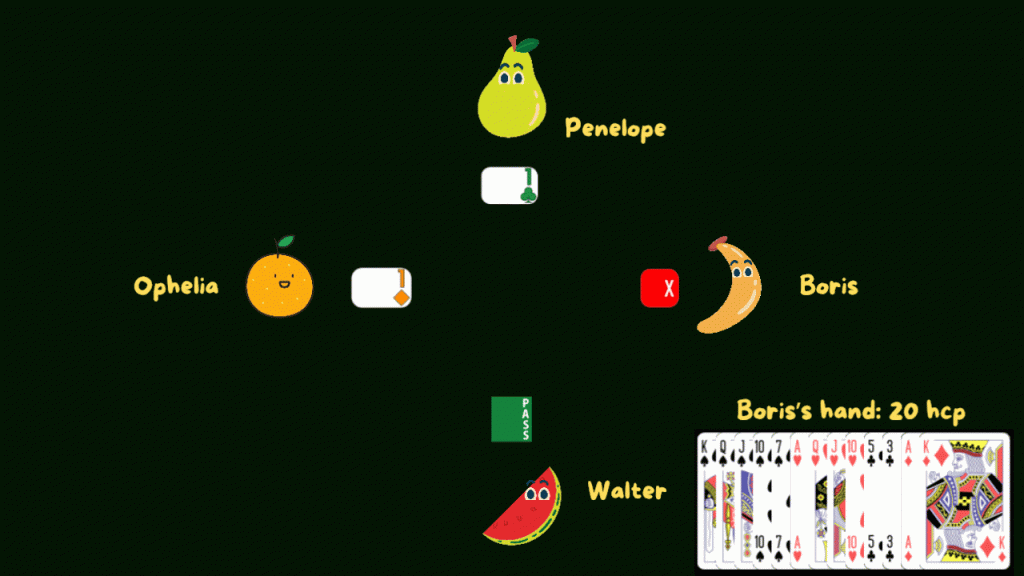
Time for Boris to wield the red card. What does his double show here?
Remember that doubles following NT opening bids by either side are for penalty. In Boris's position, there is no information yet about the other two hands, so he needs a strong hand to make a penalty double - 13 points would not be enough for him to be confident of defeating this contract.
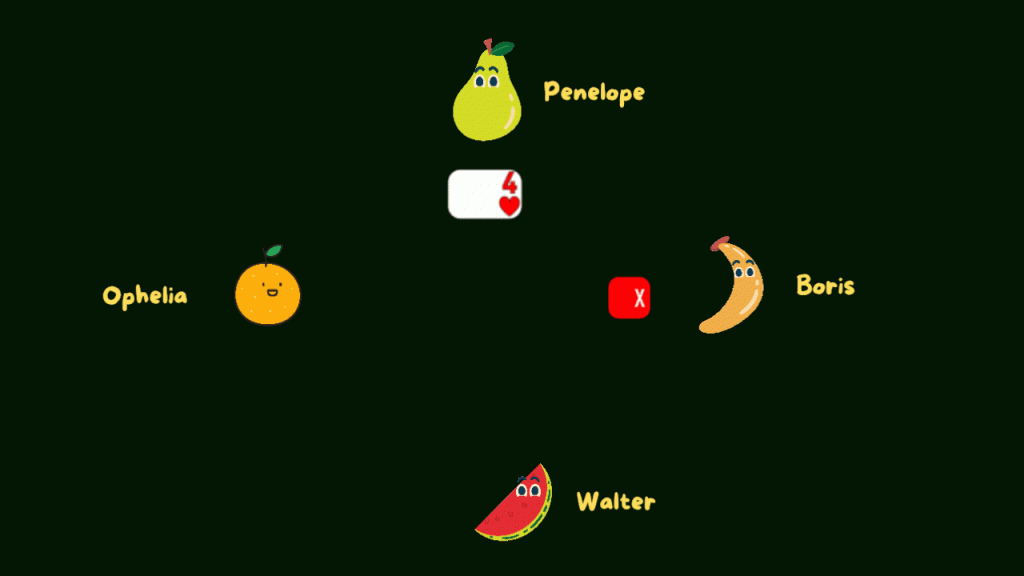
A higher-level double this time. What kind of double is this?
Doubles at or above the level of game are often for penalty, but not always. This game bid has been made pre-emptively. Penelope will have a relatively weak hand, up to about 9 points, with eight hearts. The idea behind her bid is to make it difficult for her opponents to find a good contract. Boris needs to be able to consult his partner by making a takeout double if he has a strong hand but it's not clear which contract will be best. His partner does, as with all takeout doubles, have the option to pass if she believes that they will get a better score that way (say she has three or four hearts and no real interest in playing in game in another suit). She is effectively converting the double from takeout to penalty.
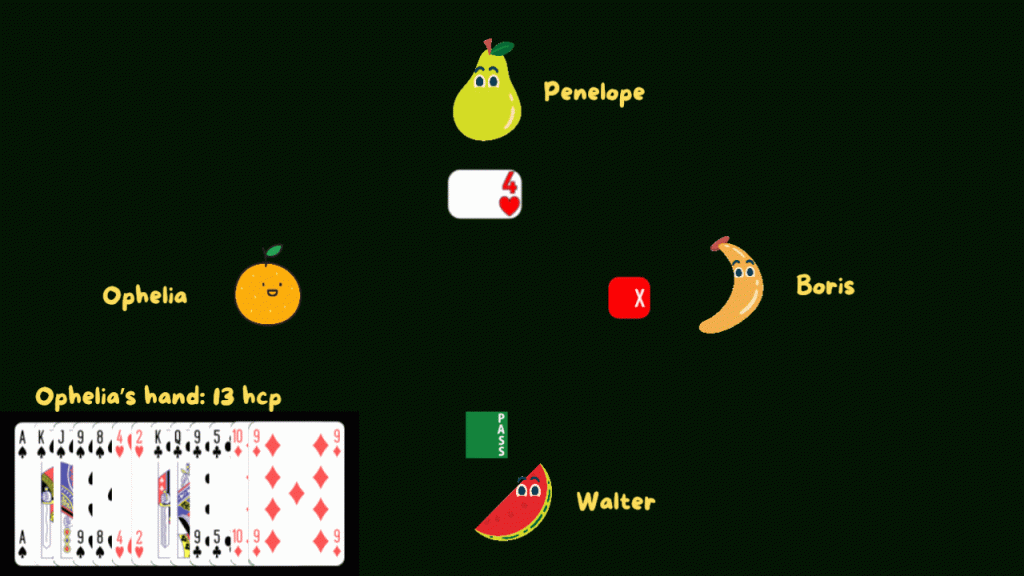
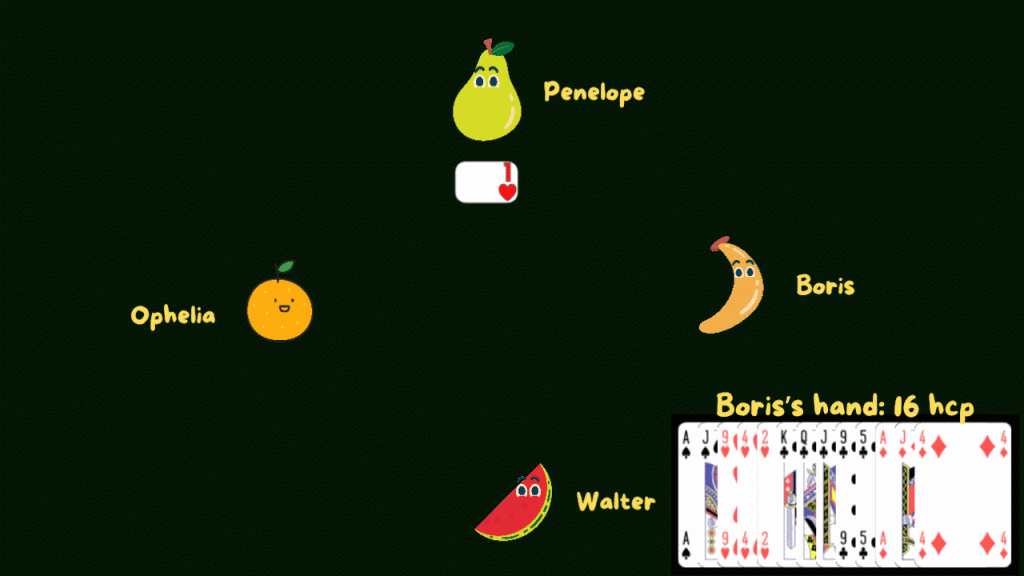
Let’s look at that same situation from Ophelia’s side now. What do you think she should do with this hand?
Boris must have a good hand in this auction, as he is either expecting to defeat 4♥ if his partner passes the double, or to be happy in any contract above 4♥ that his partner bids. With only two small hearts in her hand, Ophelia thinks that Penelope might well be able to make 8 tricks, only going two off in 4♥. Ophelia knows that her side will get a better score by bidding and making game. She has a very nice spade suit and Boris has shown tolerance for spades with his takeout double, so she should bid 4♠. Bidding 6♠ would be reckless, as Boris could also have two hearts in his hand and the defence could take the first two heart tricks.
The links will take you to the Bridge Training website, where you can have a go at different doubles. You will then be able to play the hands and see if you can make your contract. Have as many goes as you like if you don’t succeed the first time.
The takeout double is your friend. There are many situations where you want to convey the message to your partner that you have points, but you don’t have a bid that works for your hand. Watch the video to see how we use double when an opponent has opened the bidding. We will go on to look at some special uses of double in the next two steps.
See how you can use double to show many hands that don’t have a suitable overcall available.
Question 1/10
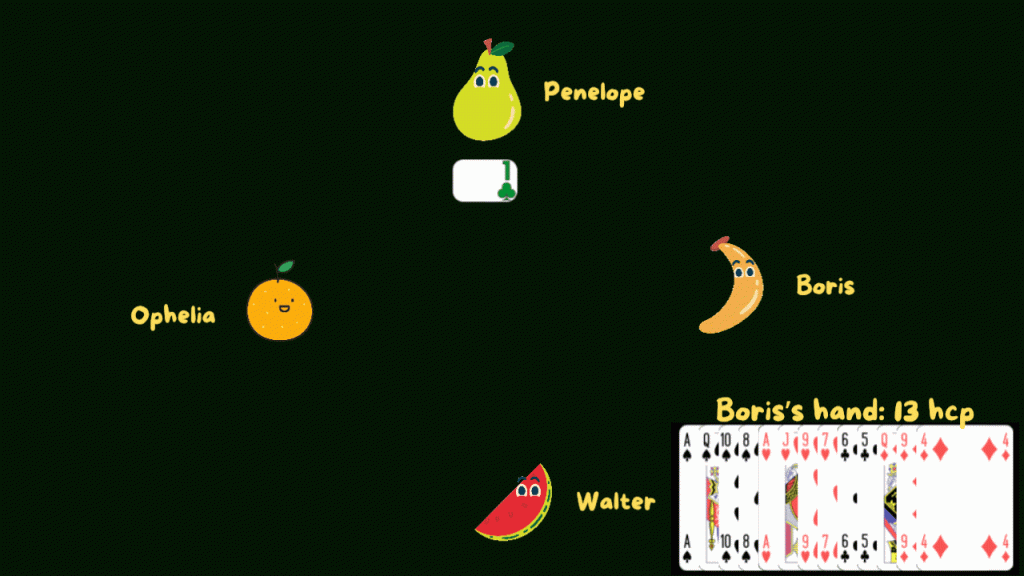
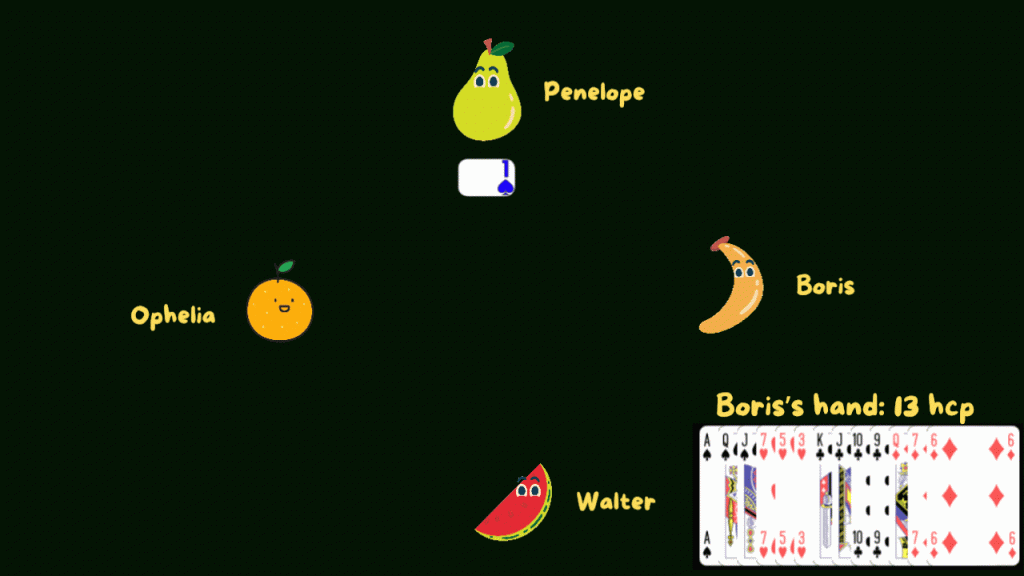
Penelope has opened 1♣ What should Boris bid with this hand?
Boris has 13 points so he would like to bid, but he has no five card suit to make an overcall. However, his hand does satisfy all of the 'SOS' criteria for a takeout double: Strength - enough to have opened the bidding, the Other suits - he's happy for Ophelia to bid any suit other than clubs, and Shortage in the suit that has been bid, so he has the perfect takeout double.
How about over Penelope’s 1♠ opening here?
With 17 points, Boris definitely wants to bid. He has neither a regular takeout double shape (too many spades, no tolerance for diamonds) nor enough strength for a power double, so double would not be right. He does, however, have good stops in Penelope's suit and enough strength to overcall 1NT, so that's what he should do.
A 1♥ from Penelope this time. Which bid best describes Boris’s hand?
Boris's hand is not suitable for a takeout double because he doesn't want his partner to bid spades. He has enough strength for 1NT but he doesn't have a heart stop, so that's also no good. He does have a nice 5 card suit of his own, though, so he can just go ahead and bid that at the 2 level.
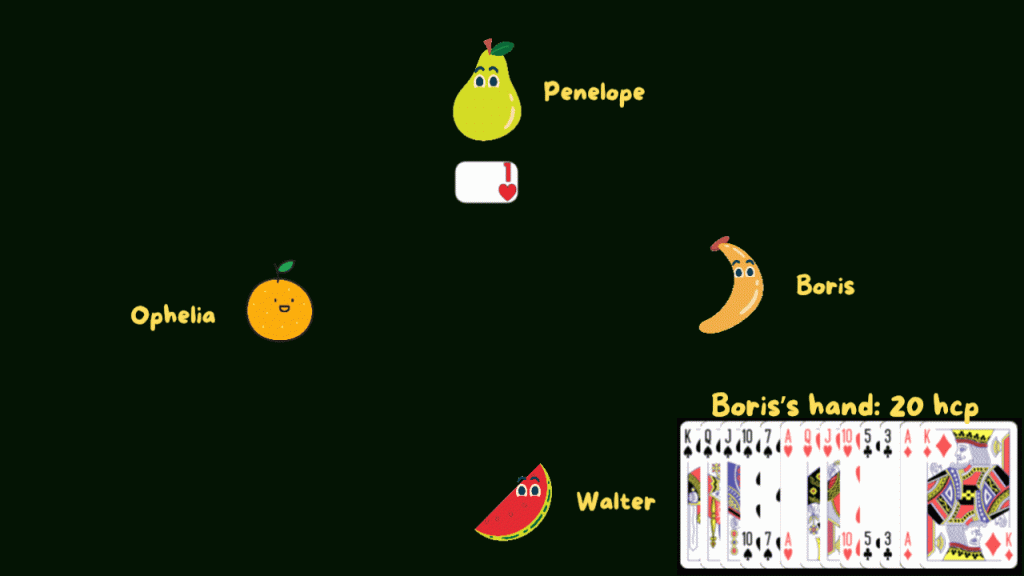
Another 1♥ opening, and Boris has a lovely hand. What should he do with this one?
Boris has a very fine spade suit and he will want to tell his partner about it, but his hand is too strong to overcall. Remember, all hands in an overcall position that have 18+ points start with double. What Boris has here is a power double. He has good heart stops but he is not necessarily looking to play in NT with that nice spade suit.
What is Boris’s best choice here, after Penelope’s 1♠ opening bid?
Boris does not have the right hand for a takeout double here. He has too much in spades and he doesn't really want Ophelia to bid hearts, which she will do whenever she has four of them. He can't bid 1NT, despite his great spade stops, because that would show 15 - 17 points. He just has to pass and see what develops. If the opponents end up playing in spades he has some good defensive cards.
Over to the other side of the table now. Penelope has opened 1♦ , Boris has doubled and Walter has passed. What should Ophelia bid with this rather weak hand?
Boris's double only promises an opening hand, 12+ points, so with up to about 8 points, Ophelia should just show her longest suit at the lowest available level.
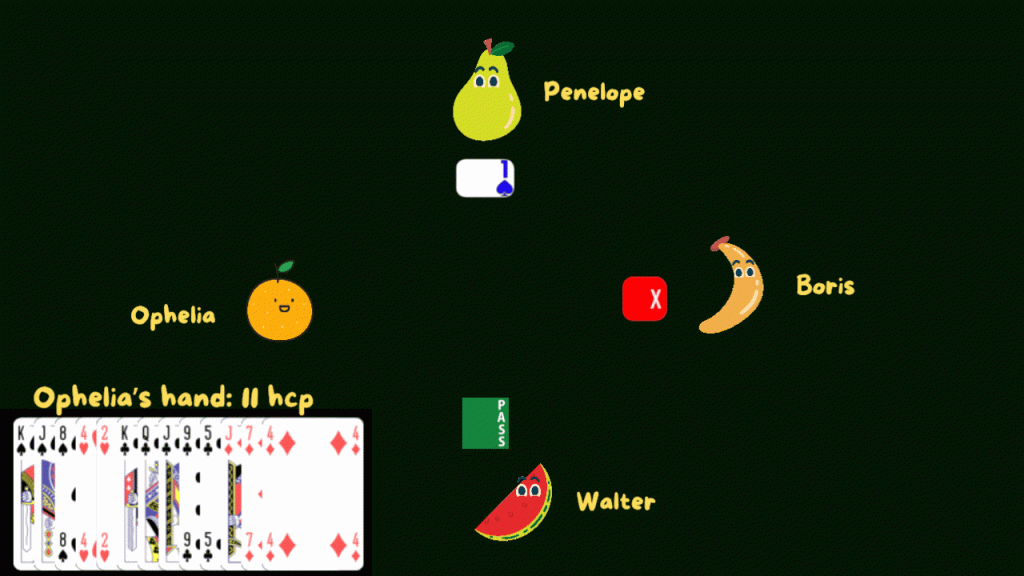
What should Ophelia do in response to her partner’s double this time?
If Boris had opened the bidding, Ophelia would assess her 11 points as being invitational. It's just the same with a takeout double, where partner has shown a hand strong enough to open the bidding. If she were to bid 2♣, that would be bidding at the lowest level available, and it would show a maximum of 8 points. With her invitational 11 she should jump a level, to 3♣.
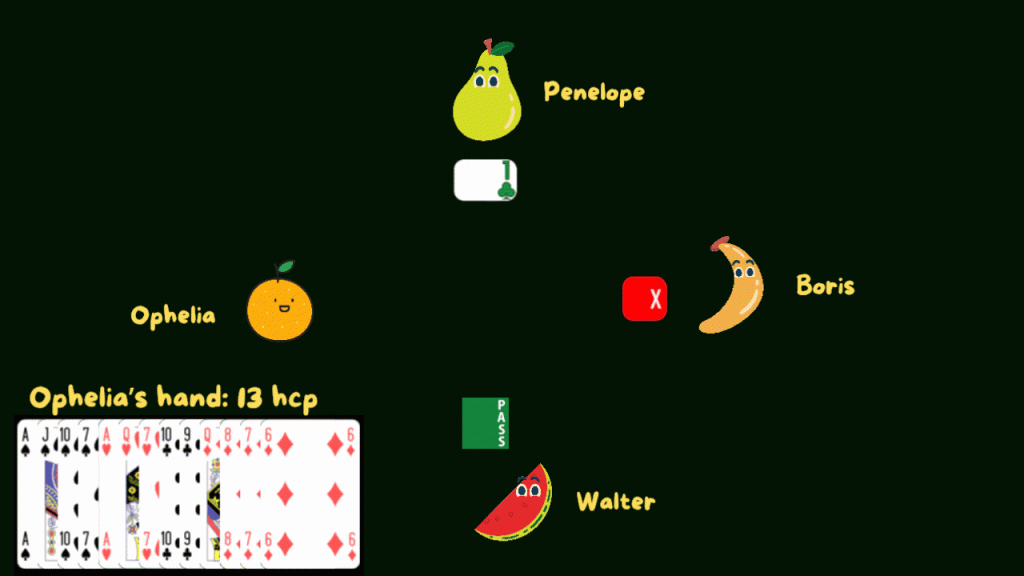
How about this one? What is Ophelia’s best bid after a 1♣ opening and a double from her partner?
Ophelia can see that with Boris having an opening hand for his double, they have enough points for game between them. She should jump straight to 4♠ to tell Boris that. He has shown tolerance for the other three suits, so worst case, he has only three spades but he may well have four and this is clearly the partnership's best chance of game. She also has four diamonds, but bidding game in that suit would mean going to the five level, and she can't consider NT because she has no club stop and Boris has shown short clubs.
Back to Boris now. Ophelia has bid spades at the lowest level, but he does have good spade support. What should he do?
Ophelia has not promised any points at all in this auction - she is forced to bid. So Boris needs a very strong hand to bid on. He should pass, happy to be in spades.
Here again, Ophelia has responded to Boris’s double at the lowest level. What should Boris bid?
Boris has a 'power double' - a hand in an overcall position with at least 18 points. He doubles knowing that he can show this strength by making another bid once his partner has responded. There is no need for him to jump in spades - his five card suit - because just bidding on after Ophelia's minimum response shows 18+ points.
The links below will take you to the Bridge Training website, where you can practice bidding in response to takeout doubles and interpreting your partner’s response to doubles. You will then be able to play the hands – have as many goes as you like if you don’t succeed the first time.
You have seen how we use double in the position directly after the opening bid, but there are other situations in which we want to deliver a similar message. Watch the video to see some examples.
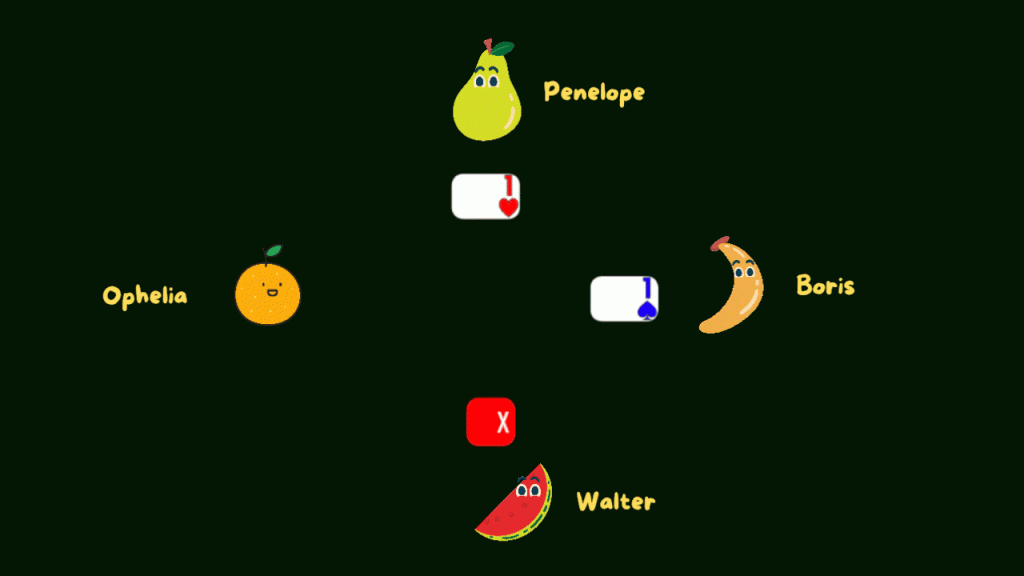
Ophelia's opponents have bid two suits, so her double shows the other two suits, at least 4-4. She should have close to an opening hand in terms of points to do this, but with more shape, say 5-5, she can have fewer points. The opponents' bids are natural (showing the suits they bid) so her double shows the unbid suits.
What about in this auction? What is Ophelia showing here?
Again, in this situation the bids so far are natural, so the double is showing the unbid suits - in this case clubs and spades. She needs fewer points than in Q1 - only about 8+ - because her partner has bid. Ophelia won't have heart fit, because she could bid hearts to show that.
Ophelia is really getting into the swing of this doubling thing. What is she showing this time?
Once again, natural bids, so showing the other suits. This is just a regular takeout double but in the fourth, rather than the second seat. The SOS criteria still apply, that is Ophelia should have Strength: an opening hand (she is forcing partner to bid at least 2♠, or at the three level if their long suit is a minor), tolerance for the Other three suits, and Shortage in hearts, probably a maximum of two cards.
Ophelia is taking a break, and Walter is doubling this time. What does his double show?
In just the same way as a double after a club opening and a diamond overcall (minor-minor) the double would show both majors (the unbid suits), this double shows both minors because both major suits have been bid naturally. If Walter had good hearts he would bid hearts, and if he had good spades he could bid NT at the appropriate level for the strength of his hand.
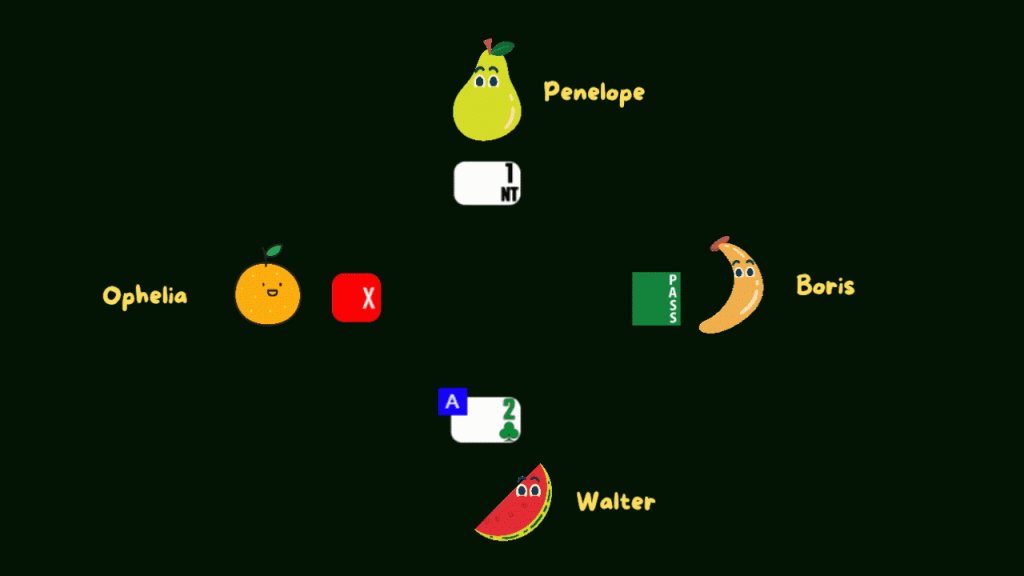
Walter’s response to his partner’s 1NT opening is Stayman, an artificial bid asking about major suits. This would be alerted by your opponents (the alert is shown here by the little blue ‘A’). What does Ophelia’s double show?
Walter's bid is artificial - it's not showing clubs - it's asking whether Penelope has a four card major. Doubles of artificial bids are 'lead directing', indicating good cards in the suit that has been bid artificially. Ophelia's's double shows a good club suit, suggesting that Boris should lead a club if he finds himself on opening lead.
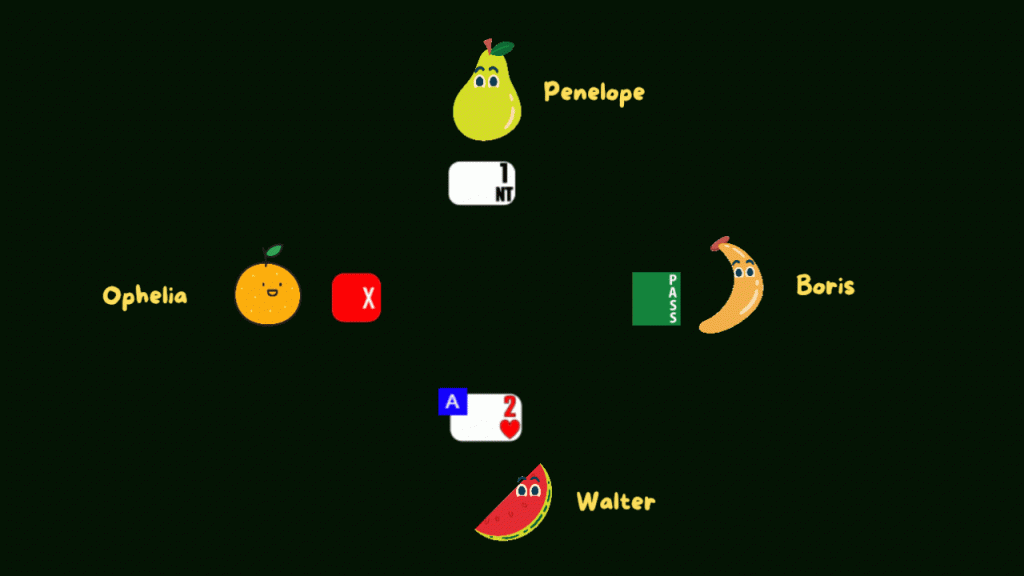
Here, Walter’s 2♥ bid is a transfer to spades. What does Ophelia’s double show?
Again, this is a double of an artificial bid - in this case a transfer to spades - so it's lead directing. Ophelia is showing a good heart suit, and that she would like Boris to lead a heart if he gets the chance. Don't be tempted to make these lead directing bids just because you have an ace in the suit (which will almost certainly take a trick anyway). You should have at least four cards in the suit (preferably five) and two of the top three honours to do this. Otherwise you might talk your partner out of a better lead.
The links below will take you to the Bridge Training website, where you can practice using double in different ways before playing the hands. In the first three hands, leaving the master trump will be the card play theme. This is when the opponents only have one trump left between them and it is higher than all of yours – normally we shouldn’t draw it because it wastes two of our trumps on a losing trick. Bear that in mind as you have a go at the hands.
Deprecated: File Theme without sidebar.php is deprecated since version 3.0.0 with no alternative available. Please include a sidebar.php template in your theme. in /home/newtrick/public_html/wp-includes/functions.php on line 6260